 My Account

 Login


Restaurant food safety training has two layers: a certified food protection manager for the operation, and food handler training for the people who prep, store and serve food. Rules differ by state and county, so the first job is to confirm what your health department requires. The second is to get every person on the roster trained and documented. Online, self-paced courses make that quick: our Food Handler’s Permit costs $13.99, and managers can take the Food Manager’s Certification with an online or in-person proctored exam through our courses page.
TL;DR
- The FDA Food Code, the model most states build their rules on, calls for a certified food safety manager, and your state or county decides the details.
- Food handler training covers temperature control, personal hygiene, cross-contamination and cleaning and sanitizing.
- Handwashing is where training pays off most: workers wash when they should only about a third of the time in the research CDC cites.
- Online, self-paced courses let you train a whole team without pulling people off the floor for a classroom day.
- If you serve alcohol, plan server certification alongside food safety so one onboarding checklist covers both.
Table of Contents
- What restaurant food safety training actually covers
- Who needs what: managers versus employees
- Handwashing: the habit that deserves its own session
- How to train a restaurant team, step by step
- What a course looks like: length, format and cost
- Add alcohol training if you pour
- Beyond food and alcohol: other required training
- Get your team certified
- Our perspective
- FAQ
- Sources
What restaurant food safety training actually covers
Good training teaches habits, not trivia. USDA’s employee training program lists the core topics: preventing foodborne illness, temperature control, personal hygiene, preventing cross-contamination, safe preparation and service, and cleaning and sanitizing. It is built for food service employees with little or no experience, and for people who need a refresher.
Those topics map to what happens on a normal shift:
- Time and temperature. Receiving, cold holding, cooking, hot holding, cooling and reheating each have a point where food goes wrong if nobody is watching a thermometer.
- Personal hygiene. Handwashing, glove use, illness reporting and clean uniforms.
- Cross-contamination. Raw proteins away from ready-to-eat food, separate cutting boards, clean utensils and allergen awareness.
- Cleaning and sanitizing. The difference between a surface that looks clean and one that has been cleaned and sanitized, and how to mix and test sanitizer.
Food safety is also not one person’s job. In a 2024 report, the FDA described food safety management systems as procedures, training and monitoring, and said food safety is everyone’s responsibility across the organization. That is the practical reason to train the dishwasher and the line cook, not only the chef.
Who needs what: managers versus employees
The certified manager layer
The FDA Food Code calls for restaurants to have a manager certified in food safety. According to CDC, certified kitchen managers typically take a food safety course and pass a test from an accredited program.
The Food Code is a model, not a national law. The FDA explains that state, local, tribal and territorial jurisdictions are responsible for retail food inspections and for adopting the code. So the details of who must be certified, and when, depend on where your restaurant sits.
Two examples show how much the details vary:
- Illinois requires at least one Certified Food Protection Manager on duty during all operating hours, and its university extension course covers Food Code principles, employee health and hygiene, cleaning and sanitizing, facility maintenance and a HACCP overview.
- In Columbia, Missouri, approved food manager training takes at least six hours, ends with an exam, and the certificate is valid for five years.
If you are a manager, plan on a full course and a proctored exam. We offer the Food Manager’s Certification with an online proctored exam or an in-person proctored exam, so you can choose the format that fits your schedule.
The food handler layer
Food handler rules usually apply to anyone who prepares, stores or serves food. California is a clear example: employees in those roles need a Food Handler Card within 30 days of hire, and employees with valid manager food safety certification already comply. Illinois takes a similar approach: food handlers with valid CFPM certification are not required to have separate food handler training.
That pattern is worth building into your onboarding: manager-level certification for the person in charge, food handler training for everyone else, and a date on the calendar for every new hire. Always confirm the exact requirement and deadline with your local health department, because counties can add their own rules.
Handwashing: the habit that deserves its own session
If you only have time to drill one topic, make it handwashing. CDC states that germs transferred from food workers’ hands are a common cause of restaurant outbreaks and recommends training workers on proper handwashing. The research it cites found workers washed when they should only about one-third of the time.
CDC also points to what managers can change. Training is one lever. The others are barriers: sinks that are hard to reach, time pressure and lack of training. Revising food preparation steps so fewer handwashes are needed is a third. In practice:
- Walk your kitchen and count the steps between each station and a handwashing sink.
- Stock soap and paper towels at every sink before the shift starts.
- Train staff on the moments that require a wash: after the restroom, after handling raw meat, after touching your face or phone, and before switching tasks.
- Watch a rush and see where people skip. Fix the layout or the prep order, not just the people.
A course gives your staff the shared vocabulary. The floor walk gives you the proof that the habit holds when the tickets stack up.
How to train a restaurant team, step by step
The keyword here is really a process question, so here is the routine from first hire to renewal.
Step 1: Find your local requirement
Check your state and county health department for three things: whether a certified manager must be on duty, whether food handler cards are required for all staff, and the deadline for new hires. This is the one step you cannot skip, and the one most often done from memory. A wrong assumption here is what turns into an inspection violation.
Step 2: Sort your people into roles
Make a simple list: managers and shift leads, cooks and prep staff, servers and bussers who handle food or ware, and dishwashers. Managers need the certified manager course and exam. The rest need food handler training. If you also serve alcohol, add a column for server certification.
Step 3: Put everyone on an online, self-paced course
Classroom days are hard to schedule in a business that runs nights and weekends. Our courses are self-paced and work on any device, so a line cook can finish on a phone between shifts. Our Food Handler’s Permit course is $13.99 per person. For restaurants with several employees, our group and corporate option is designed for managing team compliance in one place, which takes the chasing of certificates off your desk. You can start from our main page.
Step 4: Keep the paperwork where inspectors can find it
Keep a certificate or card for each employee, with the date it was issued and the date it expires, in the restaurant’s files or a shared folder. Set a reminder before each renewal. Certificate validity varies: Columbia’s manager certificate runs five years, as noted above, but other places set different periods, so use the date printed on the certificate and your health department’s rule.
Step 5: Reinforce on the floor
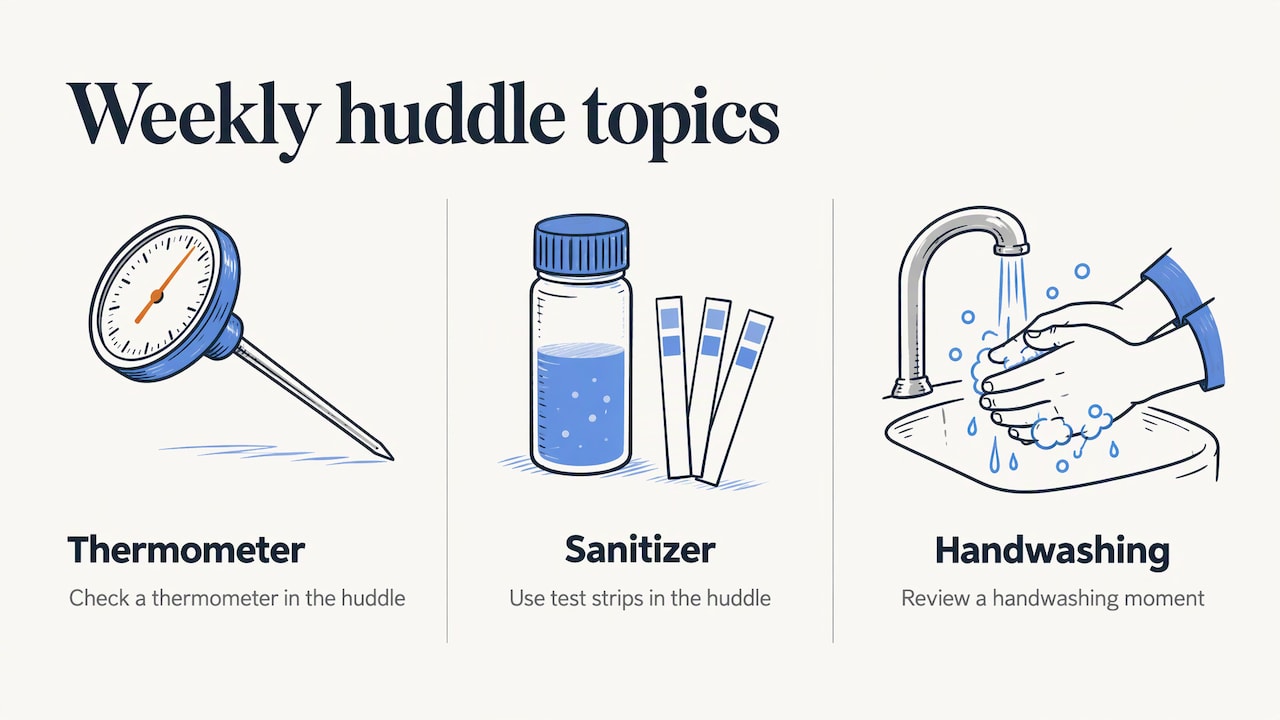
Training takes root when the kitchen backs it up. Run a five-minute huddle on one topic each week: a thermometer check, a sanitizer test strip, a handwashing moment. Pair every new hire with a trained buddy for their first shifts. If your team shares a break room or staff kitchen, a written policy keeps standards the same off the line as on it, and this overview of office kitchen hygiene policy basics lays out what such a policy needs.
What a course looks like: length, format and cost
Formats differ, which is why the research on this keyword points to such different pages. Some states approve eight-hour manager courses followed by an exam, and some food handler courses run closer to an hour or two. The pattern holds across the country:
| Layer | Who it is for | Typical format | Our option |
|---|---|---|---|
| Food handler training | Cooks, prep staff, servers, dishwashers | Short online course and assessment | Food Handler’s Permit, $13.99 |
| Food manager certification | Managers, chefs, the person in charge | Longer course plus proctored exam | Online or in-person proctored exam |
| Team compliance | Owners and multi-staff operations | Group enrollment | Group & Corporate Training |
When you compare options, look at three things: whether the course is approved where you operate, whether the exam is proctored when the manager rule demands it, and whether the certificate is instant and downloadable so you can file it the same day. Our programs are designed to be state-recognized, and the more than 100,000 learners we have trained include servers, bartenders and restaurant staff across the country.
Wider food service quality also depends on what goes onto the plate, not only on the hands that make it, and this explainer on what quality food service involves covers extra topics worth adding to a training agenda.
Add alcohol training if you pour
Many restaurants need two compliance tracks, not one. Food safety protects guests from illness; alcohol server training protects them, and your license, from over-service. Requirements are set locally. Columbia, Missouri, for example, requires a server certificate for anyone directly engaged in the retail sale, service, delivery or dispensing of alcoholic beverages. The city also says server training has been shown to decrease underage drinking, binge drinking and over-service, and can reduce liability for servers and businesses.
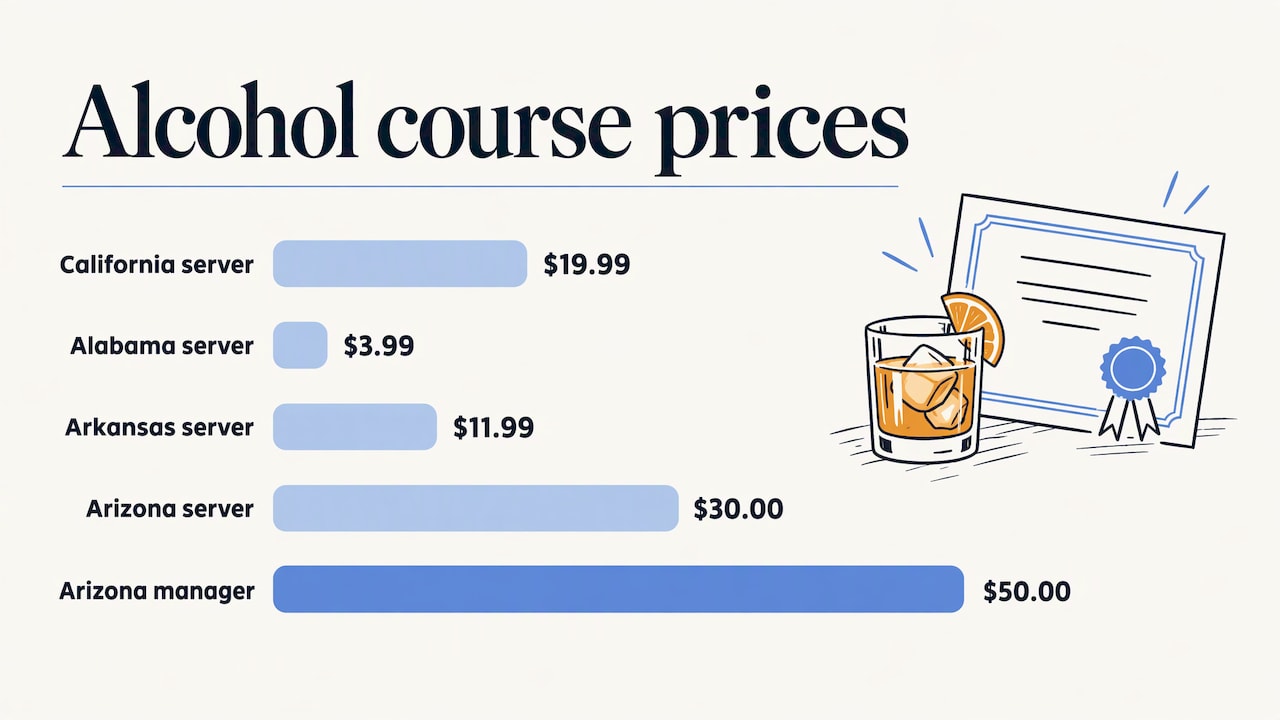
We offer state-specific alcohol server courses, with published prices such as $19.99 for California’s Responsible Beverage Server course, $3.99 for Alabama, $11.99 for Arkansas and $30.00 for Arizona’s Basic On Sale or Off Sale course. Arizona’s management course is $50.00, and state-specific server training starts from $9.99. You can see the full list in our course shop. To understand the rules before you buy, read our guide to state requirements for alcohol beverage service training, or see what the job involves in the general responsibilities of an alcohol server.
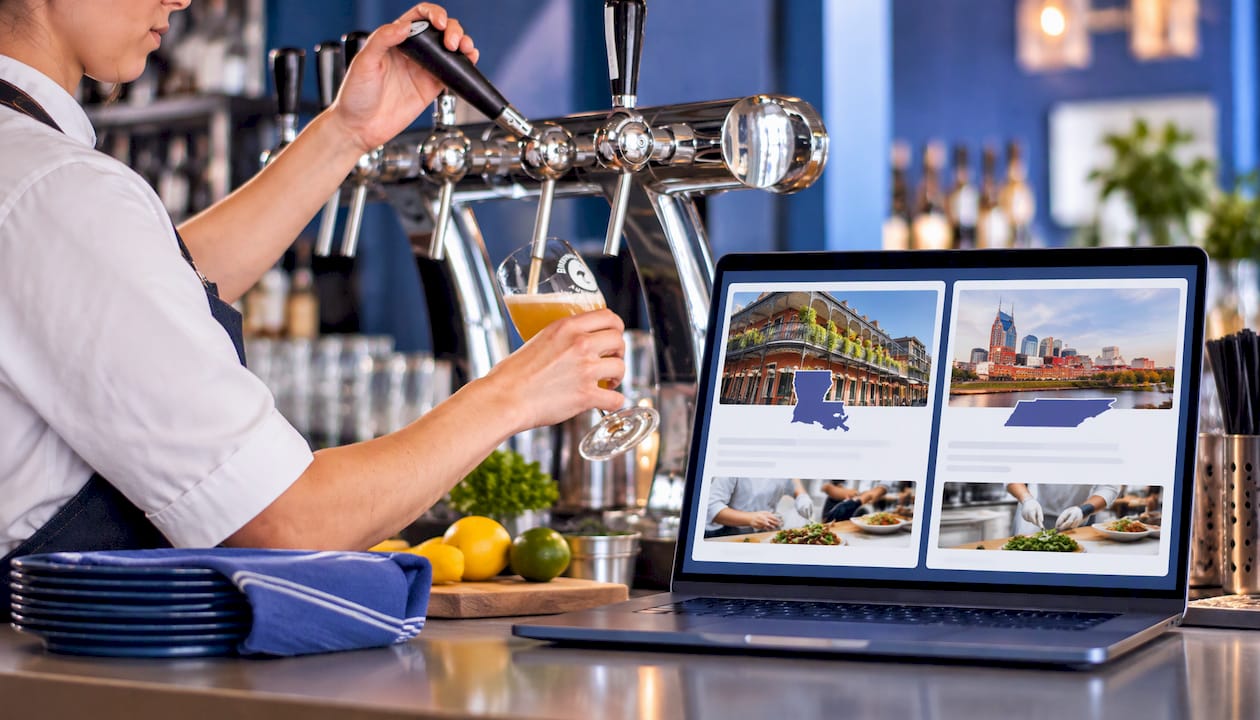
If your restaurant is in Michigan, Louisiana or Tennessee, there are bundles that pair server training with a food handler course: Michigan, Louisiana and Tennessee. One purchase covers both tracks for a new hire.
Beyond food and alcohol: other required training
A restaurant carries more training duties than the health inspector checks. We also offer sexual harassment training and workplace violence prevention courses, including a California Workplace Violence Prevention course at $34.99. Putting these in the same onboarding packet as food safety means a new hire finishes all required modules in the first days, and you have one place to see who is done.
Get your team certified
If you are setting up or cleaning up your compliance, start with the layer that is most urgent. Managers who need certification can choose the online or in-person proctored Food Manager’s exam. Line staff can take the $13.99 Food Handler’s Permit on their own device at their own pace. If you are training a whole crew, our group option keeps the whole roster in one place.
Browse the food handler course or the manager certification options and enroll the first person today.
Our perspective
Most restaurants do not fail at food safety because their people do not care. They fail because training is treated as a one-time event rather than a routine. A new hire is told to wash hands, shown the sink, and left to figure out the rest during a Friday rush.
That is why we built our courses to be flexible and self-paced and to work on any device. A cook should be able to finish the lesson at home, on a phone, the night before the first shift, and a manager should be able to see who has finished and who has not. With more than 100,000 learners trained, we have built our platform around the idea that training should be easy to start and easy to finish, so it actually gets done.
Our approach to compliance is simple: certify the manager, train every handler, add alcohol server certification where you pour, and keep the records in order. Training that is easy to complete reduces the gaps that create liability, and our programs are designed to be state-recognized so owners can act with confidence.
the author
FAQ
Do all restaurant employees need food safety training?
In many places, yes: anyone who prepares, stores or serves food needs food handler training. California, for example, requires a Food Handler Card within 30 days of hire for those employees. Your county health department sets the exact rule, so confirm it before you onboard anyone.
Does a certified manager count as trained for food handler purposes?
In some states it does. Illinois exempts food handlers who hold valid CFPM certification from food handler training, and California treats valid manager food safety certification as compliance. Check your local rule, then keep the manager’s certificate on file.
Can restaurant staff take food safety training online?
Yes. Our food handler course is online and self-paced, so staff can complete it on any device. Managers can take the food manager course online, and the exam can be proctored online or in person depending on the option you choose.
How much does restaurant food safety training cost?
Our Food Handler’s Permit is $13.99 per person. Food manager certification pricing is not published on our site, so see the courses page for current options. Alcohol server courses are priced by state, starting from $9.99.
How long does a food safety certificate last?
It depends on the jurisdiction and the type of certificate. Columbia, Missouri, lists a five-year validity for its approved food manager training. Look at the expiration printed on each certificate and calendar a renewal reminder.
Sources
- USDA Food Safety Employee Training
- FDA report on retail food organizations
- CDC: Kitchen Manager Certification
- FDA: 30 Years of the FDA Food Code
- University of Illinois Extension: Certified Food Protection Manager Course
- Illinois Department of Public Health: Food Handler FAQ
- California Restaurant Association: Training FAQ
- CDC: Food Worker Handwashing in Restaurants
- City of Columbia: Food & Beverage Safety