 My Account

 Login


Responsible beverage service certification is proof that you completed an approved course on serving alcohol legally and safely: checking ID, spotting intoxication, refusing service and keeping patrons from driving drunk. Whether you need it, which course counts and who issues the certificate depend on your state, and the fastest route is an online course built for your state that you finish at your own pace on any device. We built our state-specific server courses for exactly that, starting at $3.99 for Alabama and $19.99 for California.
TL;DR
- Seventeen states require alcohol server training by law, 24 states and D.C. run voluntary programs, 11 have local mandates and five have no requirement, per a Responsibility.org position paper with data as of January 2026.
- The course must be approved or recognized by your state. A generic certificate from another state usually does not count.
- Some states add a registration and an exam on top of the course. California does, with firm deadlines.
- Certificates expire, typically after two or three years, and renewal usually means retaking the class.
- Employers who certify staff protect their license and, in some states, their legal standing.
Table of Contents
- What responsible beverage service certification means
- Which states require it
- How to get certified, step by step
- A closer look at California
- What the course teaches
- What it costs and how long it lasts
- What happens without a valid certificate
- For restaurants, bars and managers
- Get certified online with us
- Our perspective
- FAQ
- Sources
What responsible beverage service certification means
Responsible beverage service, often shortened to RBS, is training for people who own, manage or work in places that serve alcohol. According to the Community Guide from the CDC, server training covers ID checks, recognizing intoxication, refusing service and preventing intoxicated patrons from driving, while manager training focuses on house policies.
You will see the same idea under several names: alcohol server certification, responsible alcohol service training, a server permit or a bartender card. In most states they all point to one thing: a course (sometimes plus an exam) approved by the state, ending in a certificate you can show an employer or inspector.
The public-health goal is stated plainly by California’s regulator. The California Department of Alcoholic Beverage Control says its RBS program exists to reduce harm from underage drinking and alcohol overuse in local communities.
Which states require it
The national picture is a patchwork. The Responsibility.org paper sorts states like this:
| Category | Number | Examples named in the paper |
|---|---|---|
| Mandatory statewide | 17 states | Alaska, California, Illinois, Nevada, Oregon, Pennsylvania, Tennessee, Utah, Washington |
| Voluntary programs | 24 states plus D.C. | Training encouraged, often with incentives |
| Local mandates | 11 states | Rules set by cities or counties |
| No state or local requirement | 5 states | Kansas, Massachusetts, Minnesota, Mississippi, West Virginia |
Two things matter beyond the table. First, “voluntary” does not mean pointless. The same paper notes that voluntary states often reward training with incentives such as liability protection or insurance discounts, and many employers simply require it for hiring. Second, local rules can apply even where the state stays silent, so check your city or county as well as your state.
Requirements usually cover bartenders and servers, and sometimes managers or supervisors, according to the same paper. Here is how a few mandatory states handle it:
- California. Training is mandatory since July 1, 2022 under AB 1221 and AB 82 for on-premises alcohol servers and their managers, according to California ABC. The agency reports roughly 56,000 licensees with on-premises privileges, including bars, restaurants, tasting rooms, clubs, stadiums, hotels and caterers.
- Illinois. BASSET certification has been phased in by county population and is accepted for state server license and permit laws. The statute sets a 120-day deadline after hire, and certificates last three years.
- South Carolina. A 2025 law requires anyone serving alcohol for on-premises consumption at least 10 hours a week, and managers who oversee service, to complete approved training. The SCDOR says the deadline was May 1, 2026, or within 30 days of starting a job.
- Pennsylvania. Under the state’s voluntary-looking RAMP program, the PLCB requires at least 50% of a licensee’s alcohol service staff to be trained, and trainees must score 80% or better on the exam. RAMP certification is valid for two years.
- Texas. The TABC strongly recommends seller-server certification because it may protect employers from certain liabilities under the Alcoholic Beverage Code.
Because rules change, confirm the current requirement with your state’s alcohol regulator before you buy a course.
How to get certified, step by step
The process looks different in each state, but it follows the same arc. California shows the most steps, so it is a good model.
Step 1: Find out what your state actually requires
Check whether your state, county or city mandates training, who is covered (servers, bartenders, managers, security) and how soon after hire you must finish. Deadlines are short: 30 days in South Carolina, 60 days in California and 120 days in Illinois. This is where people go wrong most often: they start a job, assume they have months, and miss the window.
Step 2: Pick a course your state recognizes
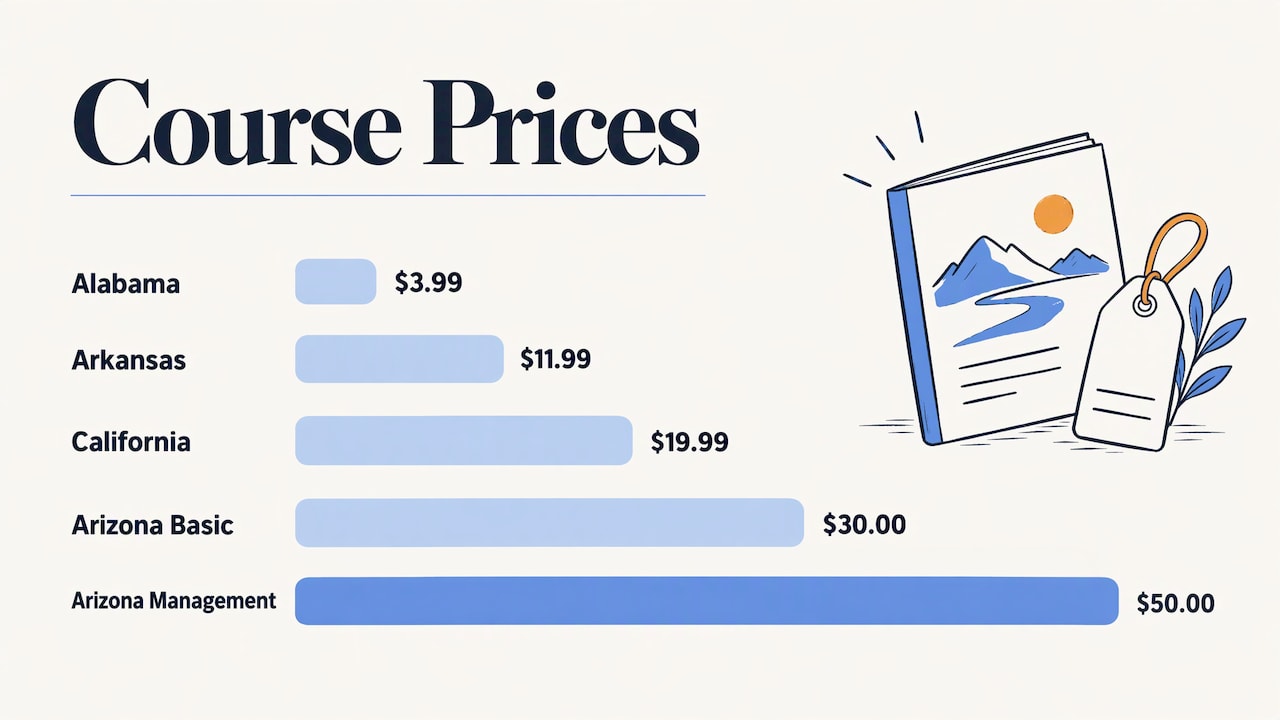
A course only counts if your regulator approves it. Pennsylvania notes that training costs are set by providers and vary, and that training is available online, in a classroom or through approved instructors. Our courses are state-specific, so you choose your state at the start and take training built for its rules. The price you see on the course page is the price you pay: for example, $19.99 for the California course, $11.99 for Arkansas and $3.99 for Alabama.
Step 3: Register if your state requires it
California is the example. First-time certification means registering in the state’s RBS Portal and paying the registration fee before or alongside your training. Skipping registration is a common mistake, because the course alone does not produce a state certificate.
Step 4: Complete the training
Online courses let you stop and restart, so you can study between shifts. Most people finish in a few hours. The TABC says its seller-server course can be completed in two hours, and Kentucky’s STAR course takes about three hours. Our courses are self-paced and work on a phone, tablet or computer, so a lunch break or a slow Tuesday is enough to make progress.
Step 5: Pass the exam where one is required
In California, you must pass the ABC exam within 30 days of confirmed training completion, and the exam is offered in eight languages, including Hindi, Punjabi and Tagalog. Pennsylvania’s server trainees need 80% or better. A step that the state’s regulator administers, like the California exam, is part of the official process, and it is the one part of certification that happens on the state’s side.
Step 6: Keep proof of certification
In South Carolina, servers get a certificate number right after training, the state certificate arrives within about two weeks, and servers must carry a digital or physical copy while serving. Save your certificate somewhere you can pull up on your phone during an inspection.
A closer look at California
California has the largest server workforce and one of the strictest timelines, so many searches for responsible beverage certification come from there. Here are the key rules from the state ABC’s RBS page:
- You must be certified within 60 days of your first day of employment.
- You register in the RBS Portal, take training from an approved provider, then pass the ABC exam within 30 days of confirmed training.
- Certification is valid for three years.
- Training is offered in English, Chinese, Korean, Spanish and Vietnamese.
- The regulations sit in California Code of Regulations, Title 4, Article 25, Sections 160 to 173.
If you work in California, start with our California Responsible Beverage Server Training Course. For the rules in more depth, we also publish a guide to alcohol server certification requirements in California and an explainer on California’s beverage service training specifics.
What the course teaches
A good responsible alcohol service course turns rules into things you can do on a busy Friday night. According to the Responsibility.org paper, training should cover:
- State and local alcohol laws
- Checking ID and spotting fake IDs
- Recognizing signs of intoxication
- Measuring standard drink sizes
- Refusing service politely and safely
- Helping customers leave without driving
Pennsylvania’s description of server training matches: detecting fake IDs, identifying signs of intoxication and managing patrons responsibly. The TABC adds that its course teaches intervention techniques to prevent sales to minors and intoxicated customers.
A few habits from that material are worth practicing right away:
- Count and pace. Know what a standard drink is in your pour, so you can track how much a guest has had.
- Watch behavior, not just speech. Changes in coordination, volume, mood and speed of drinking are warning signs. Our guide to identifying and assisting intoxicated patrons walks through them.
- Refuse early and calmly. Offer water or food, say it is house policy, and involve a manager if needed.
- Plan the ride home. Arrange a taxi, a rideshare or a sober friend before a guest reaches the car keys.
If you want a broader view of the job itself, read the general responsibilities of an alcohol server.
What it costs and how long it lasts
Cost depends mostly on your state, because each regulator sets its own rules for fees and approved providers. Some examples from official pages:
| State | Course cost | Time | Validity |
|---|---|---|---|
| Kentucky (STAR) | $40 per person, plus a 2.75% card fee or $0.35 for ACH | About 3 hours | 3 years |
| California | Registration and exam fees to the state, plus provider course fee | Varies, exam within 30 days | 3 years |
| Texas (TABC) | Set by approved schools | About 2 hours | 2 years |
| Pennsylvania (RAMP) | Set by providers | Varies | 2 years |
Our own published prices run from $9.99 for state-specific alcohol server training, with $3.99 for Alabama, $11.99 for Arkansas, $19.99 for California, $30.00 for Arizona Basic On Sale or Off Sale and $50.00 for Arizona Management On and Off Sale. Fees the state itself charges, such as California’s registration fee, are separate from the course price.
Put your renewal date in your phone calendar the day you certify. In California, you recertify before expiration by logging into the RBS Portal, paying the fee, retaking approved training and passing the exam within 30 days. Illinois works the same way: BASSET is renewed only by retaking the class.
What happens without a valid certificate
The penalties land on both the worker and the business, and they vary by state:
- South Carolina: licensees pay a $100 penalty per violation for servers who cannot keep or produce a certificate, per the SCDOR.
- Texas: serving an intoxicated person is a misdemeanor with a $100 to $500 fine and up to a year in jail, and selling to a minor is a Class A misdemeanor with up to a $4,000 fine and a year in jail, per the TABC FAQs.
- Washington: the state’s penalty schedule escalates from a 5-day permit suspension or a $100 to $200 fine for a first violation up to permit revocation for a fourth.
Texas also shows why employers value certification. Under its safe harbor provision, the TABC will not take administrative action against a license holder when the seller is certified, all employees and immediate managers are certified within 30 days of hire, the employer has written responsible-service policies, does not encourage violations and has fewer than three violations in 12 months. Forged certificates are a crime, so always complete the real course.
For restaurants, bars and managers
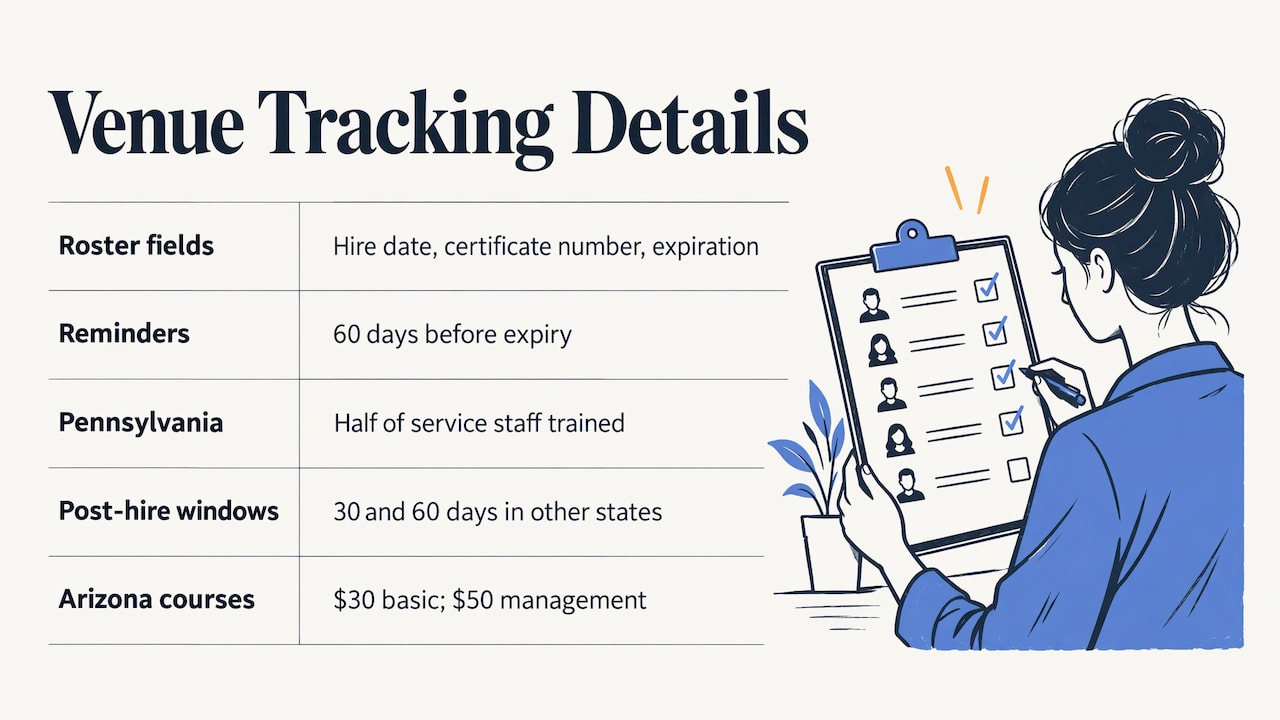
If you run a venue, the question is not only whether your servers are certified, but whether you can prove it quickly. Keep a roster with each person’s hire date, certificate number and expiration date, and set reminders 60 days before expiry. Pennsylvania’s rule that half of alcohol service staff must be trained, and the 30-day and 60-day post-hire windows in other states, make a tracking sheet a necessity.
Team training is where our group and corporate option fits. It is built so a manager can enroll a team and keep track of compliance in one place, rather than chasing individual receipts. Managers can also add related courses to the same plan: our catalog includes food handler permits, food manager certification, sexual harassment training and workplace violence prevention. For employers who assign other safety courses alongside alcohol training, a resource on how to buy and assign employee safety training shows how some organizations structure it.
Managers and owners are often covered by separate or additional requirements. Arizona, for instance, has a Management On and Off Sale course in our catalog, priced at $50.00, separate from the $30.00 basic courses.
Get certified online with us
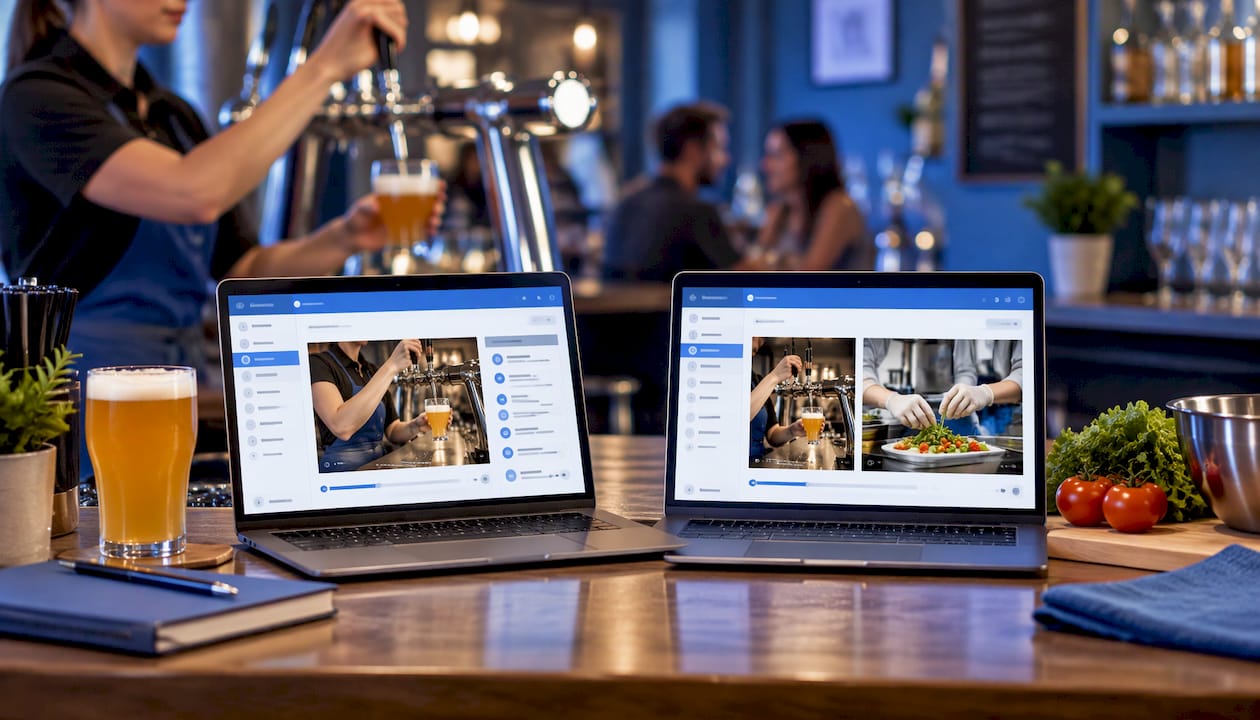
We have trained over 100,000 learners, and our courses are built around a simple idea: you pick your state, learn at your own pace on any device, and finish with a certificate that your state recognizes. We say our pass rate is the highest in the industry, and our format is designed so you can stop and pick up where you left off.
California servers can start with the California Responsible Beverage Server Training Course at $19.99. Working in another state? Browse all state courses in our shop, or contact us through our main site about group and corporate training for your team. Need a food handler card too? The Food Handler’s Permit is $13.99.
Our perspective
Most servers do not fail certification because the material is hard. They run into trouble because of timing: a deadline they did not know about, a registration step they skipped or a certificate that quietly expired. That is why we build our courses to be state-specific, self-paced and usable on any device, so training fits around a work schedule instead of the other way around.
We also think certification is worth more than a card in your wallet. The skills in a good course, checking ID carefully, noticing early signs of intoxication and refusing service without a scene, protect you, your coworkers and your guests. For employers, trained staff and a clear record of who is certified make compliance routine instead of a scramble before an inspection.
That is the reason we pair individual courses with group and corporate options: one person finishing a course is good, and a whole team certified and tracked is better.
the author
FAQ
How long does responsible alcohol service training take?
It depends on the state. Texas says its seller-server course can be completed in two hours, and Kentucky’s STAR course takes about three. Online, self-paced courses let you split the time over several sessions. In states with an exam, such as California, add time for the test.
How long is a responsible beverage server certificate valid?
Most are valid for two or three years. California, Illinois and Kentucky certificates last three years, while Texas seller training and Pennsylvania RAMP last two. Renewal typically means retaking approved training, and in California it also means passing the exam again.
Can I use a certificate from one state in another?
Usually not. Each regulator approves its own courses and issues or recognizes its own certificates, so take training for the state where you will serve. If you move, look up the new state’s rules before your first shift.
Do I need certification if my state does not require it?
Not by law in every case, but many employers ask for it. According to the Responsibility.org paper, voluntary states often offer incentives such as liability protection or insurance discounts, and local rules may apply even where the state has none. Check your city or county, and ask your employer.
What if I am a manager or owner?
Managers are often covered, and some states have separate manager courses. California’s mandate extends to servers’ managers, and South Carolina covers managers who oversee alcohol service. Check your state’s regulator for the right course.
Sources
- Alcohol: Responsible Beverage Service, The Community Guide
- RBS Training Program, California Alcoholic Beverage Control
- Alcohol Service Training Programs, Responsibility.org position paper
- Illinois Compiled Statutes, 235 ILCS 5/6-27.1
- Recognized Training Programs, South Carolina Department of Revenue
- Apply for RAMP Certification, Pennsylvania Liquor Control Board
- TABC Certification, Texas Alcoholic Beverage Commission
- TABC Certification FAQs
- Department of Alcoholic Beverage Control, Kentucky
- Chapter 314-17 WAC, Washington State Legislature
- Buy and assign employee safety training, XGuard