 My Account

 Login


Corporate compliance training is how an employer teaches staff the laws, regulations and company rules that apply to their jobs, and keeps proof that it did. A working program has five parts: a risk assessment, training matched to each role, delivery that suits your team (online works well), a check that people understood it, and records you can hand to an auditor. This guide walks through each part, with examples for restaurants, bars and other hospitality employers.
TL;DR
- Start with the risks and legal duties in your own business, then map each one to the roles that must be trained.
- Online, self-paced courses let you train shifts that never overlap, as long as you track completion and test understanding.
- Keep more than a completion percentage: save the curriculum, the roster and the dates.
- Requirements differ by state and by job. Alcohol server permits, food handler cards and workplace safety rules each have their own rules.
- Plan refreshers and retraining whenever laws, equipment or procedures change.
Table of Contents
- What corporate compliance training actually covers
- Who needs to take it
- How to build a compliance training program, step by step
- Delivering training online to a distributed team
- Checking that people understood, not just clicked
- Keeping records that survive an audit
- A simple calendar for ongoing compliance
- Our perspective on compliance training
- Train your team with ABC Server Training
- Restaurant compliance, one location or twenty
- FAQ
- Sources
What corporate compliance training actually covers
The label sounds corporate, but the idea is simple. Some rules apply to what your employees do every shift. Compliance training makes sure they know those rules and that you can show they were taught.
The topics depend on your industry. For a restaurant or bar, the usual list includes:
- Alcohol service: checking ID, refusing service to intoxicated guests, and the state’s server permit or certification rules.
- Food safety: food handler training for staff and manager-level certification for the person in charge.
- Workplace safety: hazards, injury prevention and emergency procedures.
- Harassment prevention: what counts as harassment and how to report it.
- Workplace violence prevention: hazard recognition and response plans, required in some states.
OSHA keeps a reference of mandatory safety and health training provisions in its standards. Its publication Training Requirements in OSHA Standards lists them and tells readers to check current interpretations and decisions for specific compliance questions. Use it as a starting map, then confirm the details that apply to your workplace.
Who needs to take it
Short answer: nearly everyone on your payroll takes something, but not the same thing. A dishwasher, a bartender and a general manager face different requirements.
A useful way to sort it is by role:
| Role | Typical compliance training |
|---|---|
| Servers and bartenders | Alcohol server certification where the state or locality requires it, food handler training, harassment prevention |
| Kitchen staff | Food handler training, workplace safety |
| Managers and owners | Management-level alcohol training in some states, food manager certification, harassment and violence prevention, training oversight |
| New hires | Everything required for the role, within the time window set by the rule |
The details vary a great deal by state. New Mexico, for example, requires anyone who serves and sells alcohol, including bartenders, bouncers, waiters, waitresses and store clerks, to pass an approved Alcohol Server Education Course and obtain a server permit. The same agency says people must be 21 or older to sell or serve in bars, lounges and stores, while 18-to-20-year-olds may serve with meals in full-service restaurants but may not bartend. Servers renew by taking another certification course.
Florida takes a different route for food service. Regulated establishments must provide annual training to employees involved in storing, preparing, serving or cleaning food. Florida’s 2026 guidance sets the annual deadline at March 31 and gives employees hired afterward 30 days to complete training. Training can be in person, through computer modules or by video.
Two states, two completely different mechanisms. That is why a one-size-fits-all policy fails and why a state-by-state approach is the safe default. For a broader rundown by role, see our guide to mandatory training for restaurant and grocery employees.
How to build a compliance training program, step by step
OSHA’s Resource for Development and Delivery of Training to Workers is a good backbone even if your topic is not strictly safety. It says effective training begins with a needs assessment, measurable learning objectives, adult-learning principles, course design, implementation and evaluation. It presents ADDIE (Analysis, Design, Development, Implementation, Evaluation) as one systematic model.
Translated into a restaurant or bar workflow:
- Document a risk assessment. List the legal duties and hazards in your operation: alcohol service, food handling, injuries, harassment, violence. Note which state and local rules apply.
- Map obligations to roles. Build a simple matrix of who needs which course and by when. New hire deadlines belong here.
- Set measurable objectives. “Servers can identify valid ID and refuse service to an intoxicated guest” is measurable. “Servers understand alcohol law” is not.
- Choose relevant, accessible content. Staff work odd hours on varied devices. Training that runs on a phone and can be paused and resumed gets finished.
- Get review. Have someone with legal, compliance or operational knowledge confirm the content matches your state’s rules.
- Pilot the workflow. Run one or two employees through enrollment, the course and record retrieval before rolling out to everyone.
- Launch with manager accountability. Every manager owns completion for their team.
One trigger people forget: change. When you add equipment, change a procedure or a law changes, the training that covered the old way is out of date. A kitchen that installs new cooking equipment needs staff trained on its safe operation, and the equipment’s own specifications matter, as in these school kitchen oven requirements. Treat each change as a reason to review the relevant module.
Delivering training online to a distributed team
Hospitality teams are the hardest to train in one room. Shifts rotate, part-timers come and go, and multi-location owners cannot be everywhere. Online delivery solves the scheduling problem.
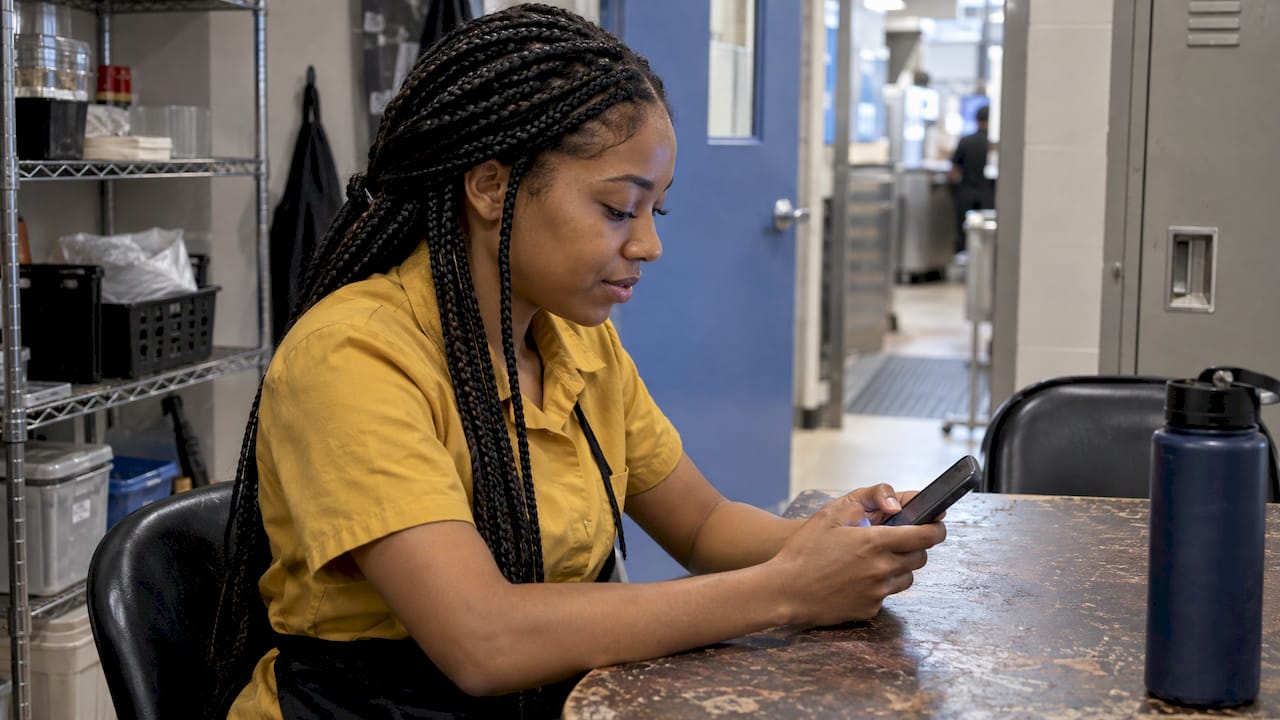
OSHA’s guidance on training delivery describes the tools employers use for this: a learning management system can handle role-based assignments, reminders, recurring certifications, assessments, dashboards, and completion or audit reports. You do not need enterprise software to apply the idea. What matters is that you can answer, at any moment, who has been assigned what, who has finished, and who is overdue.
What good online delivery looks like for a restaurant or bar:
- Self-paced access on any device, so staff can finish between shifts.
- Assessments inside the course, not just a click-through.
- Certificates you can download and file for each employee.
- One place to manage the team, so a manager is not chasing screenshots in a group chat.
Florida’s guidance confirms online modules and video are acceptable delivery for its annual food service training. Always check that the format your state accepts matches the course you buy, especially for state-approved alcohol server programs, where approval is often tied to a specific provider list.
Checking that people understood, not just clicked
Completion is the easiest number to report and the weakest evidence of learning. OSHA’s guidance points to better signals: assessment and scenario performance, employee confidence, repeat errors, incidents, audit findings and observed behavior.
In practice:
- Use scenario questions. “A guest who has had three drinks asks for another. What do you do?” tells you more than a definition quiz.
- Watch for repeat mistakes. If several servers keep missing ID checks, the issue is in the training or the floor routine, not the people.
- Look at incidents. Injury logs, complaints and near misses should feed back into your next round of training.
- Have managers observe and coach on shift. Training and supervision reinforce each other.
Keeping records that survive an audit
If you cannot prove a training happened, a regulator will treat it as if it did not. Good records are the unglamorous half of compliance.
Florida’s guidance gives a practical standard: establishments must maintain the curriculum and attendance roster for three years and make them available to the Department on request. Note that it is both documents, not just a percentage complete. Even where your state does not set a retention period, that is a sound habit.
A minimal record for each training event:
- Employee name and role
- Course title and version (or curriculum)
- Date completed and score, where there is one
- Certificate or permit number, where one is issued
- Expiration or renewal date
California shows how recordkeeping fits into a broader safety program. Its Restaurant Employees Workplace Safety & Health Guide says the state’s Injury and Illness Prevention Program must include responsibility, compliance, communication, hazard assessment, incident investigation, hazard correction, training and instruction, employee access to the written program, and recordkeeping under Title 8 section 3203. The same guide recommends frequent refresher training for new and younger restaurant employees on site-specific hazards, causes of injuries and illnesses, hazard controls, workplace policies and safe work practices.
If you operate in California, our pages on California employers’ requirements for a compliant plan and on California SB 553 workplace violence prevention training go deeper. For harassment rules, read whether harassment training is required for your California employees.
A simple calendar for ongoing compliance
Training is not a one-time event. Build a yearly rhythm so nothing lapses:
| When | What to do |
|---|---|
| At hire | Assign every required course for the role, with the state deadline noted |
| Within the first weeks | Confirm completion and file certificates |
| Each year | Run refreshers where required, such as annual food service training in states that mandate it |
| Before renewal dates | Re-enroll staff whose alcohol server certification or permit is about to expire |
| After any change | Retrain when a law, procedure or piece of equipment changes |
| After an incident | Review whether training gaps contributed and update the content |
A shared spreadsheet is enough to start. What counts is that one person owns it and checks it on a schedule.
Our perspective on compliance training
We have trained more than 100,000 learners, and one pattern repeats: businesses do not fail compliance because they do not care. They fail because training is scattered across shifts, locations and spreadsheets, and nobody can say who is certified today.
That is why we built our courses to be self-paced and usable on any device. A bartender can finish a state server course on a phone between shifts. An owner can enroll a team and see who is done. Training that fits real hospitality schedules gets completed, and training that gets completed is the only kind that protects your license and your staff.
Our approach is to keep requirements state-specific, keep the course short enough to finish, and keep the paperwork simple. Our programs are designed to be state-recognized, and we aim for the highest pass rate in the industry so employees finish with confidence rather than frustration. For employers, that means less liability exposure and fewer last-minute scrambles before an inspection.
If you manage a team, our advice is to pick one system for alcohol, food safety and workplace training, assign by role at hire, and review records every quarter.
the author
Train your team with ABC Server Training
We offer online certification for the roles hospitality employers staff most often. Published prices include state alcohol server courses from $9.99, a California Responsible Beverage Server course at $19.99, Arizona Basic On Sale and Off Sale courses at $30.00 each, an Arizona Management course at $50.00, an Alabama course at $3.99 and an Arkansas course at $11.99. The Food Handler’s Permit is $13.99, and California Workplace Violence Prevention is $34.99. Browse everything on our shop page.

We also offer food manager certification with online or in-person proctored exams, sexual harassment training and group and corporate options for managing a whole team. See our courses or start from the homepage to set up team training.
Restaurant compliance, one location or twenty
For a single restaurant, the owner or general manager can run the matrix by hand. For a group, standardize: the same role-based assignments, the same deadlines, and a named manager at each site accountable for completion. Our restaurant compliance checklist lays out what to have in place when launching a training program, and our food handler training hub covers the food safety side. In Florida specifically, see the requirements for food handling in Florida and our Florida Responsible Vendor training.
A few habits make multi-site compliance manageable:
- One owner per location for training records.
- A common naming and filing convention for certificates.
- Monthly overdue checks rather than annual surprises.
- State-by-state notes, because a transfer from one state to another can reset requirements.
FAQ
What is corporate compliance training?
It is workplace education on the laws, regulations and company policies that apply to employees’ work. Employers use it to prevent violations, improve safety, promote ethical behavior and document that required instruction took place.
Can employees complete compliance training online?
Often yes. Florida’s guidance, for example, allows food service training in person, through computer modules or by video. Alcohol server programs are usually approved by the state, so confirm your state’s rules and choose a course recognized there.
What records should I keep?
Keep the curriculum, the attendance roster or completion list, dates, and any certificate or permit numbers. Florida’s guidance asks food service establishments to keep the curriculum and roster for three years and to produce them on request.
How often should staff be retrained?
It depends on the rule. Some require annual training, some require renewal of a server permit by retaking a course, and many reward frequent refreshers for new employees. Retrain as well whenever a law, procedure or equipment changes.
How do I manage training for a whole team?
Assign courses by role at hire, set deadlines, and have one person check completion on a schedule. Group and corporate training options from a provider that offers team enrollment make this easier than tracking individual purchases.
Sources
- Training Requirements in OSHA Standards
- Resource for Development and Delivery of Training to Workers (OSHA)
- Restaurant Employees Workplace Safety & Health Guide (California DIR)
- Florida Department of Health employee training guidance, 2026
- Alcohol Beverage Control FAQs for Servers (New Mexico RLD)